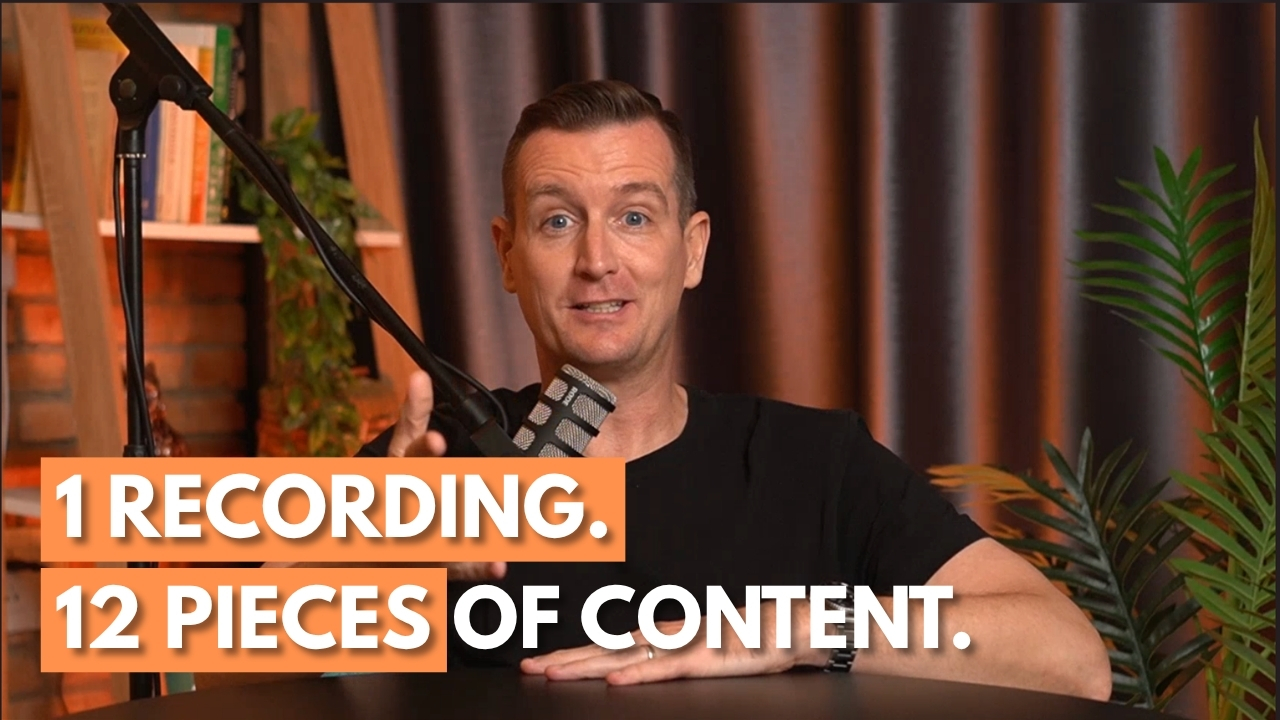


This is me, Niall Mackay, founder of Seven Million Bikes Podcasts. In this episode, I talked about how to repurpose podcast content so one recording could become the engine for your whole content system.
I knew how hard content creation could feel. Most business owners I spoke to were not short of ideas because they had nothing useful to say. They were tired because they treated every platform like a separate job.
A LinkedIn post was one task. A reel was another task. A newsletter was another task. A blog post was another task. A podcast episode was another task.
But it did not have to be that way. A podcast was not just one piece of content. It was the raw material for everything else.
Table of Contents
Why a Podcast Episode Was the Best Place to Start
A podcast episode was the best starting point because it was full of ideas.
In one 25-minute episode, I could share stories, explain a framework, give examples, challenge common advice, and say things that worked well as quotes. I might not even realise how much was in there until I went back and looked at it.
That was what made podcasting so powerful.
A good podcast episode usually includes:
- one clear main idea
- two or three useful stories
- a few strong examples
- one or two personal opinions
- several lines that could become social posts
That meant I did not need to create five new ideas for five different platforms. The ideas were already there. I just needed to pull them out and shape them for each place.
A LinkedIn post only needed one strong idea. A short-form video only needed one strong moment. A newsletter only needed one useful lesson. A blog post needed the main points from the episode.
All of that was already inside the recording.

That was the key lesson for me: the podcast was the raw material. Everything else was extraction and reformatting.
But this did not mean copying and pasting the transcript everywhere. That was not the point. A transcript was not a blog post. A random clip was not a strong short-form video. A quote from the episode was not automatically a good LinkedIn post.
To repurpose podcast content well, I had to respect each platform. The same idea could travel across different places, but it needed to be shaped in the right way.
The podcast gave me the source. The system helped me turn that source into useful content.
How to Repurpose Podcast Content Into 10+ Pieces
I called this system the content waterfall.
The idea was simple. One recording sat at the top, and everything else flowed down from it.
From one podcast episode, I could create a full set of content for the week. Not by creating from scratch, but by pulling out the best parts and turning them into different formats.
Here was the basic system.
1. The Full Podcast Episode
The full episode was the anchor piece.
This was the main content. It could be 20, 25, or 30 minutes. It gave me space to go deep, explain the full idea, share stories, and build trust with the listener.
I published the full episode as audio on the major podcast platforms. Spotify, Apple Podcasts, and the other directories were where podcast listeners already spent their time.
But I also believed the video version mattered more than ever. YouTube was a huge discovery platform, and video gave people another way to connect with me. Even if it was just me speaking to the camera, it still added a layer of trust.
The full episode was where the real relationship was built. Everything else pointed back to it.
Read More: The Power of Podcast Branding: Podcast for business
2. Three Short-Form Video Clips
From that full episode, I could usually pull three short-form video clips.
These clips were not random moments. They had to stand on their own. Someone should be able to watch the clip without knowing anything about the full episode and still get value from it.
The best clips usually came from:
- a contrarian take
- a specific result or number
- a strong story moment
- a light bulb insight
These clips could go on TikTok, Instagram Reels, and YouTube Shorts.
Their job was discovery. Someone might not listen to a 25-minute podcast from a person they did not know. But they might watch a 35-second clip. If that clip gave them value, they might click through to the full episode.
That was how short-form content worked best. It was not the final destination. It was the doorway.
How To Promote A Podcast On Social Media?
3. Five Quote Graphics
Every good episode had lines that stood out.
Sometimes it was a short sentence that explained the whole idea. Sometimes it was a strong opinion. Sometimes it was a simple phrase that made people stop scrolling.
Those lines could become quote graphics.
I did not think these needed to be fancy. Simple branded graphics worked best. Clear text, clean design, easy to read. They could be posted on Instagram, LinkedIn, or even reused inside a newsletter.
Quote graphics helped reinforce my ideas. Over time, people started to connect certain messages with me and my brand.
That was not just content. That was positioning.
4. One Newsletter
The newsletter came next.
This was not a full summary of the episode. That was a mistake I saw people make. They tried to include everything, and the email became too long and too boring.
The better version was simple. I picked one key insight from the episode and wrote about that.
The newsletter could be around 300 to 400 words. It should feel useful even if the reader never clicks the link. But it should also give them a clear reason to listen to the full episode.
The structure was simple:
- open with the problem
- explain the key insight
- give one example
- link to the full episode
That was enough. The newsletter was for people who already knew me. It was a way to stay in touch, give value, and bring them back to the main podcast.
5. One LinkedIn Post
The LinkedIn post was different from the newsletter.
The newsletter was for my existing audience. LinkedIn was for a wider audience. So the post needed to stand on its own.
I would take the main argument from the episode and turn it into a clearly written post. Usually, it needed a stronger opening line than the newsletter. It needed to make people stop and think.
A good LinkedIn post could include a bold statement, a short story, a lesson, and a question at the end.
I also liked to put the podcast link in the first comment instead of the main post. LinkedIn did not always like posts that sent people away from the platform, so this was a simple way to keep the post cleaner.
Again, the idea was not to copy the transcript. It was to take the strongest idea from the episode and make it work as a social post.
6. One Blog Post
The blog post was one of the most important pieces in the whole system.
This was where the search came in. Google could not properly read my podcast episode inside Spotify or Apple Podcasts. But it could read a blog post on my website.
That was why I wanted a blog post for every episode.
The blog post could be 400 to 600 words at a minimum, or longer if the topic needed more detail. It should include headings, key points, and links to listen to the episode.
This was where the keyword mattered. For this blog, the keyword was repurpose podcast content. That phrase needed to appear naturally in the title, introduction, headings, and body of the article.
A blog post gave the episode a longer life. A social post might disappear in a day or two. A blog post could bring people to the podcast for months or years.
That was why I saw the blog as part of the engine, not an extra task.
When I added it all up, one recording could become:
- one full podcast episode
- three short-form video clips
- five quote graphics
- one newsletter
- one LinkedIn post
- one blog post
That was at least twelve pieces of content from one recording.
And every single piece had a job. The clips created discovery. The newsletter kept the relationship warm. The LinkedIn post started conversations. The quote graphics reinforced the message. The blog post helped with Google. And all of it pointed back to the full episode.
That was how the content waterfall worked.
Conclusion – Repurpose podcast content
The biggest benefit of this system was simple. It removed the blank page.
Instead of waking up and asking, “What should I post today?” I could ask, “What did I already say in the podcast that could help someone today?”
That was a much better question.
When I learned to repurpose podcast content, I stopped seeing a podcast episode as one piece of content. I saw it as the start of a whole system.
One recording could become clips, posts, emails, graphics, and blogs. Each piece had a purpose. Each one reached people in a different place. And each one could bring people back to the full episode.