

Many business owners are frustrated. They pour hours into scripting, recording, and promoting their podcast, yet they see a disconnect between their listenership and their bottom line. They say, “I’m building an audience, but where are the clients?”
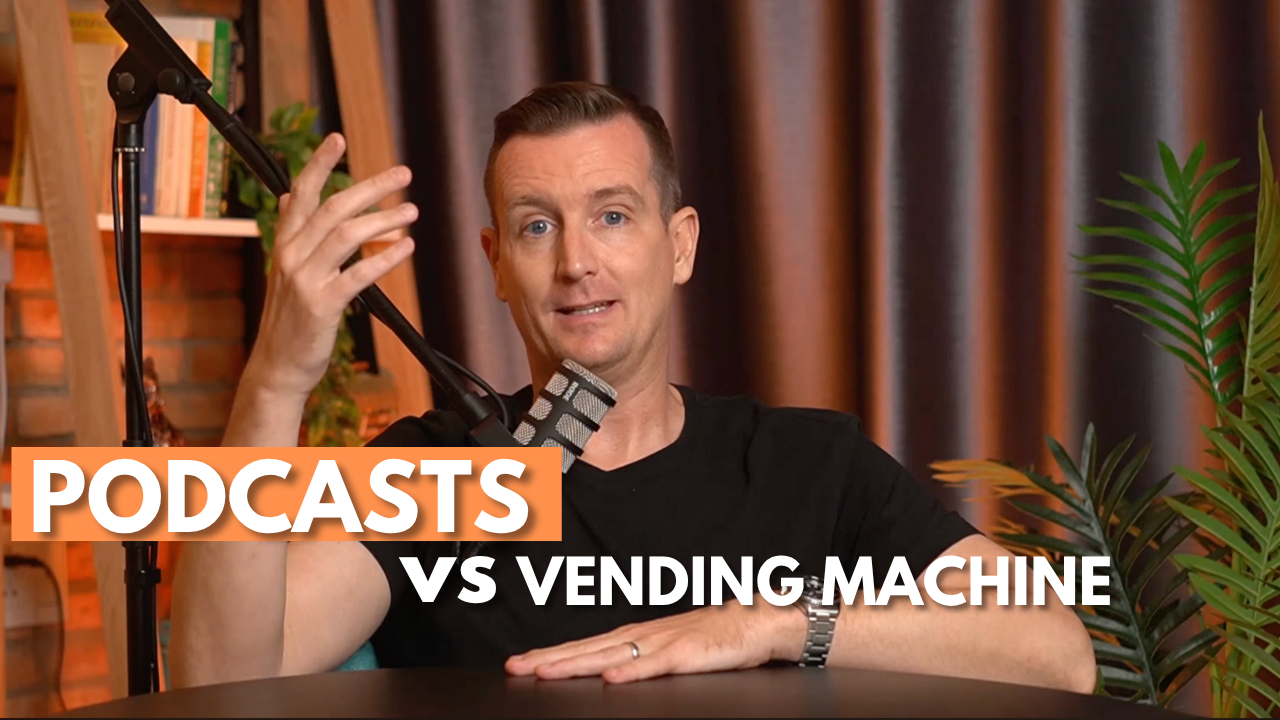
The problem is the “vending machine” mindset. Too many podcasters treat their show like a landing page, expecting a straight, linear path from listener to buyer. When that doesn’t happen, they assume the podcast is failing.
By shifting your mindset from transactional “conversion” to relational “connection,” you will realize your podcast is doing more for your business than you think. Let’s look at the three specific paths to turning that trust into revenue.
The Problem with Vending Machine Marketing
In a digital world, we are conditioned for instant gratification. Facebook ads rely on a simple premise: a user clicks, lands on a page, and decides to buy within minutes. The process is fast, low-commitment, and easily tracked on a spreadsheet.
Podcasting, however, operates on the opposite principle: trust-based marketing.
Listeners rarely convert after a single episode. Instead, they binge your content over weeks or months while driving or working, gradually building a nuanced understanding of your values and expertise. By the time they contact you, they have not been pushed into a purchase, they have pulled themselves toward you.
When you treat a podcast like a vending machine, you miss the point. You aren’t just tracking a transaction; you are cultivating a relationship. Attempting to measure podcast ROI with short-term ad metrics ignores the long-term, high-value trust you are actually building.
Why Your Podcast Needs Trust-Based Marketing
- Deep Access: A listener spends twenty to thirty minutes at a time inside your head. No other medium allows for this level of consistent, long-form connection.
- Human Resonance: People do not buy products from brands; they buy solutions from people they trust. Your voice is the most humanizing tool you have.
- Pre-Qualification: By the time a listener becomes a lead, they already know your philosophy. They are already sold on your approach, which makes the sales process infinitely smoother.
Here are the revised sections, refined to be more concise and structured with bullet points for each path.
Path One: The Long Game of Listener to Client
The classic listener-to-client journey is legitimate, but it is rarely fast. I value honesty as the bedrock of trust-based marketing, so let’s be clear: most podcast-driven leads take three to twelve months from their first listen to their first inquiry. This is actually a natural business timeline. Think about hiring a consultant; you rarely hire them the day you meet. You need to hear them speak, read their work, and build confidence first. Your podcast is simply a trust accelerator that moves this process along.
- Due Diligence: Prospects can “vet” you while they commute or work out.
- The “Pre-Closed” Call: If a lead finds fifty episodes of you demonstrating brilliance on your topic before a sales call, that call is effectively closed before it starts.
- Multiplier Effect: Your podcast isn’t just a conversion tool; it makes every other part of your marketing, from cold emails to referrals, perform at a much higher level.
Path Two: The Underrated Power of Guest-to-Client
Many business owners ignore the guest-to-client path, yet it is a premier form of trust-based marketing. By inviting your ideal clients onto your show, you build a genuine relationship long before you ever make an offer. You aren’t pitching; you are providing a platform and demonstrating your expertise in real-time. By the end of a thirty-minute conversation, they understand that you grasp their world and their challenges better than anyone else.
- Immediate Rapport: An interview creates a structured, high-value environment to build professional chemistry quickly.
- The Power of Reciprocity: Giving someone a platform creates a foundation of gratitude and mutual respect that traditional networking cannot match.
- Inherent Value: The interview itself acts as a live sample of your work, removing the need for a “hard sell.”
Path Three: Building Your Owned Audience
Many podcasters leave money on the table by relying solely on platforms like Apple or Spotify. Those platforms are excellent for discovery, but you do not own the relationship. If an algorithm shifts, you could lose your connection to your audience overnight. Trust-based marketing requires you to transition listeners from “rented” platforms to “owned” channels, such as an email list or private community.
- Actionable Content Upgrades: Instead of a generic “book a call” pitch, offer a specific resource – like a worksheet or template, that helps them apply what they just learned.
- Active Participation: When a listener trades their email address for a resource, they transition from a passive listener to an active participant in your business.
- Faster Conversion: Email subscribers convert into clients much faster than casual listeners because they have already “raised their hand” and demonstrated a desire for more of your help.
The Brutal Truth About Podcast ROI
I need to be very clear so that you do not fall into the trap of thinking a podcast is a magic bullet. Your podcast, on its own, is not going to be a money machine. If you publish episodes and do nothing else, no email capture, no guest strategy, no clear call to action, you will build a small audience of people who enjoy your voice. That is nice, but it will not pay the bills.
The business podcasters who win are the ones who treat the podcast as a trust accelerator rather than a direct conversion tool. They look back at month twelve and realize they have built an incredible pipeline. The ones who quit at month two because they have not seen a “direct return” are missing the fact that they have already done the hardest part of business, which is capturing attention and building authority.
Principles of Sustainable Growth
- Value First: If your content is just a thinly veiled sales pitch, people will smell it. Your episodes must be useful even if the listener never hires you.
- Consistency: Trust is built through repetition. Showing up week after week is the biggest signal of your reliability.
- Strategic Intent: Every episode should be designed to move your listener one inch closer to understanding how you can help them.
Final Thoughts: Trust-based Marketing
You do not need to use all three paths at once. Start by picking the one that fits your business model best. If you are in high-ticket B2B, the guest path might be your goldmine. If you are in coaching or education, the email list path will likely convert fastest. If you are building a personal brand, the listener-to-client path is your long game.
Be flexible. Experiment. Treat your listeners with respect, and do not try to rush the process. Trust-based marketing is not about tricking people into a sale. It is about proving that you are the most reliable, knowledgeable, and helpful partner for the problem they need to solve.
Are you ready to stop chasing vanity metrics and start building a podcast that drives real business results? Head over to sevenmillionbikes.com and book a discovery call. Let’s look at your goals and see if we can build a strategy that actually works.