
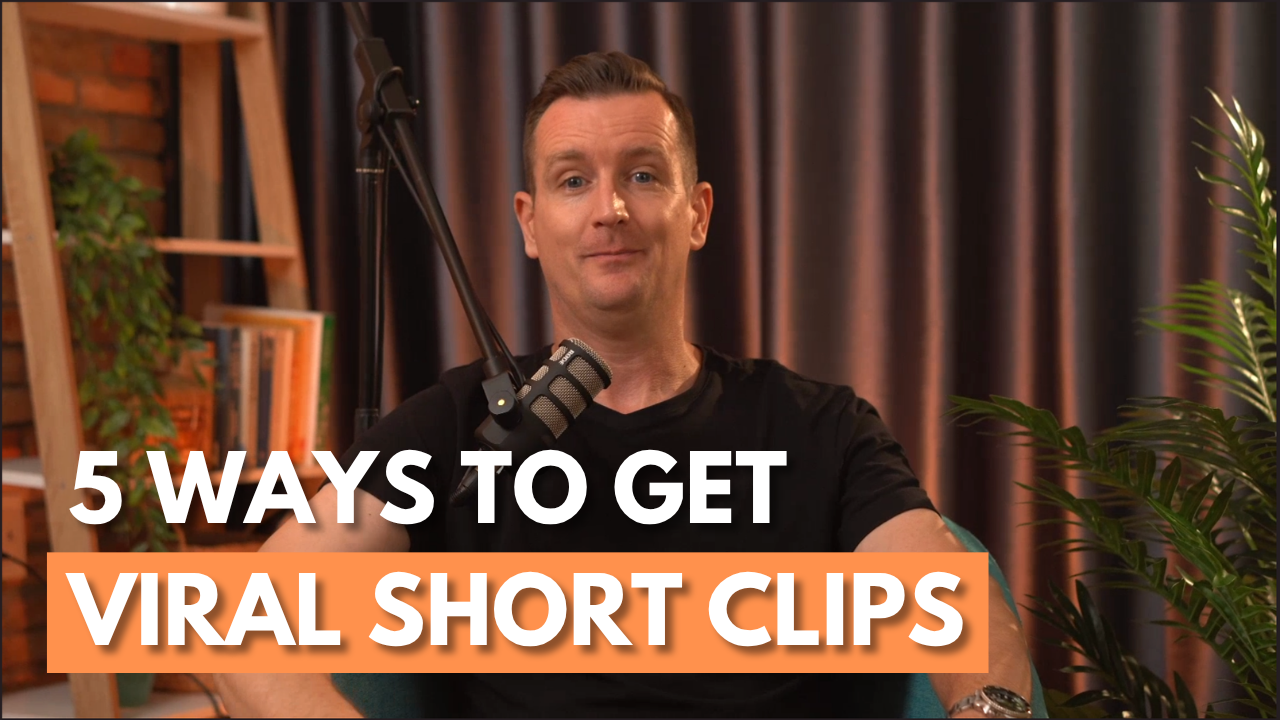


This is me, Niall Mackay, founder of Seven Million Bikes Podcasts. Business podcast content strategy was something I used to see people overcomplicate all the time, especially when they tried to be on every platform at once.
I had this conversation with clients again and again. They would ask me if they needed to be on TikTok, Instagram, LinkedIn, YouTube Shorts, email newsletters, and everywhere else. They felt like they had to create new content for every single platform. It sounded productive, but it was usually just exhausting.
The biggest problem was not that they were creating too much content. The problem was that none of it connected.
A better business podcast content strategy was to make the podcast the centre of everything. One strong long-form episode could become the source for short-form clips, social posts, newsletters, blog posts, and sales conversations. The podcast did the heavy lifting. Everything else supported it.
Table of Contents
Why Most Business Podcast Content Strategies Feel So Hard
A lot of business owners thought they had a content problem. I saw it differently. They had a structural problem.
They were creating content in separate boxes. Podcast in one box. LinkedIn in one box. Instagram in one box. Newsletter in one box. YouTube Shorts in another box.
That meant every platform needed a new idea, a new angle, and a new piece of energy.
This was why the content felt so draining. It was not just the posting. It was the constant thinking. What should I say today? What should I film this week? What should I write about? What will get attention?
Instead of creating five separate ideas, they could create one strong podcast episode and then pull everything else from it.
That gave them:
- A clear main message
- Better consistency across platforms
- More content from less effort
- A stronger reason for people to listen to the full episode
- A better system for podcast content repurposing
This was where a proper podcast marketing strategy started to make sense. It was not about doing more. It was about making each piece connect.
Short-Form Content Got Attention, Long-Form Podcast Content Built Trust
One of the most important lessons I shared was this: short-form and long-form content had different jobs.
- Short-form content got attention.
- Long-form podcast content built trust.
A good trailer made you want to watch the movie. But you did not build a real connection with the characters from the trailer alone. That happened during the movie.
It was the same with podcast clips. A short clip was not meant to do everything. It was meant to create enough interest for someone to go deeper.
This changed how I thought about short-form content for podcasts. I stopped seeing clips as random social media posts. I saw them as doorways.
The clip opened the door. The full episode built the relationship.
The Smarter 80/20 Rule for Podcast Repurposing
When clients asked me how much time they should spend on short-form content, I gave them a simple answer.
- Spend 80 percent of your creative energy on the long-form episode.
- Spend 20 percent of your creative energy turning that episode into short-form content.
Most business owners had it the wrong way round. They spent most of their energy trying to create social media posts, and then they rushed the podcast episode. So the clips were weak because the main episode was weak.
I believed the better system was this:
- Plan one strong podcast episode
- Record it with clear ideas and useful stories
- Pull the best moments from that episode
- Turn those moments into podcast clips
- Send people back to the full episode
This was a much better podcast repurposing strategy because the podcast became the source. You were not trying to create something new every day. You were extracting value from something you had already made.
The Five Types of Podcast Clips That Actually Worked
One of the biggest mistakes I saw was that people pulled clips just because they sounded nice. But a good clip needed more than a clean sentence. It needed a reason for someone to stop, watch, and want more.
After producing a lot of content for clients, I started to see patterns. The best clips usually fit into one of five types.
1. The Contrarian Take
A contrarian take challenged what people already believed.
This worked because it created tension. When someone heard something that went against normal advice, they wanted to know why.
For example, if someone said, “Posting every day is not a content strategy,” that could stop the right person immediately. They might agree. They might disagree. Either way, they would want to hear the reason behind it.
A contrarian clip worked best when it was not just controversial for attention. It needed to be backed up in the full episode. The short clip created tension. The long-form podcast content explained the thinking.
That was a powerful way to use social media clips for podcasts because it gave people a reason to move from the clip to the full conversation.
2. The Specific Number or Result
People loved numbers because numbers felt concrete.
A vague clip was easy to ignore. A specific result was harder to scroll past.
For example:
- “This one change doubled our podcast enquiries.”
- “We turned one episode into ten pieces of content.”
- “This client saved five hours a week by changing their workflow.”
- “One podcast episode helped start three sales conversations.”
These kinds of lines created curiosity. The viewer wanted to know how it happened. That was exactly what a good clip should do.
This was especially useful for business podcast marketing because it moved the content from general advice into real outcomes. Numbers made the value easier to understand.
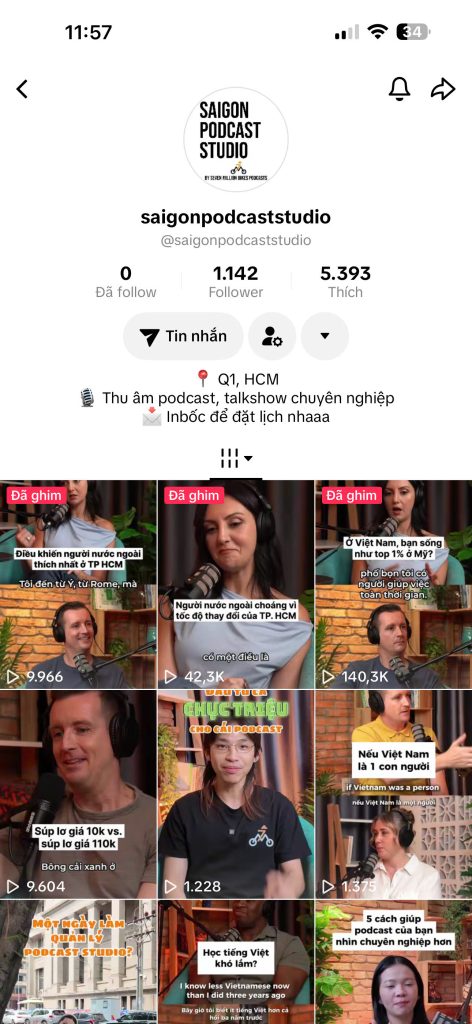
3. The Relatable Struggle
Not every clip needed to teach something. Some clips worked because they made people feel seen.
A relatable struggle was a moment where you described a problem so clearly that the viewer thought, “That is exactly what I have been dealing with.”
This could be the business owner who posted every day and still got no leads. It could be the podcaster who spent too much time editing and not enough time promoting. It could be the expert who had great ideas but no clear system for sharing them.
Those clips worked because they created emotional connection.
People shared content that explained their frustration better than they could explain it themselves.
That was why this type of clip was so useful in a podcast growth strategy. It helped the right listener feel understood before you ever tried to teach them anything.
4. The Lightbulb Framework
A lightbulb framework was a simple way of explaining something complicated.
This could be a metaphor, a one-line reframe, or a simple model.
The trailer and movie analogy was a good example. Short-form was the trailer. Long-form was the movie. It was easy to remember, and it changed how people understood the whole strategy.
These moments were powerful because they travelled well. People liked to share simple ideas that made them look smart or helped their team understand something faster.
A strong framework could become:
- A short video clip
- A LinkedIn post
- A newsletter section
- A graphic
- A talking point in a sales call
This was one reason I loved using podcasts as anchor content. A good episode often contained simple ideas that could be reused in many ways.
5. The Vulnerable Admission
This was the one people were often afraid to use.
A vulnerable admission was when you shared a mistake, a failure, or something you got wrong.
These clips worked because they felt human. They showed that you were not pretending to have everything figured out. They also gave the listener permission to stop being perfect.
For example, a podcaster might say, “I spent too long worrying about audio quality and not enough time making the episode useful.”
That kind of line had power because it was honest. It also carried a lesson.
For me, vulnerability was one of the strongest tools in growing a business podcast because trust was built through honesty. People did not just want perfect advice. They wanted to know that you had learned from real experience.
Conclusion – Business Podcast Content Strategy
A smart business podcast content strategy was never about doing more. It was about making the main thing better.
For me, that meant putting the podcast at the centre and letting everything else support it. Short-form content helped people discover the episode. Long-form podcast content built the trust. The clips, captions, newsletters, and blog posts all had a clear job. They worked together instead of pulling in different directions.